
A Legacy in Good Hands
Buffalo’s First Lady of Jazz Culture and Education
Written by Ekaete Bailey
Images by Kalvin Booker (Through His Lens Photography)
Video Directed by Aitina Fareed-Cooke
Filmed by Luqman Muhammad
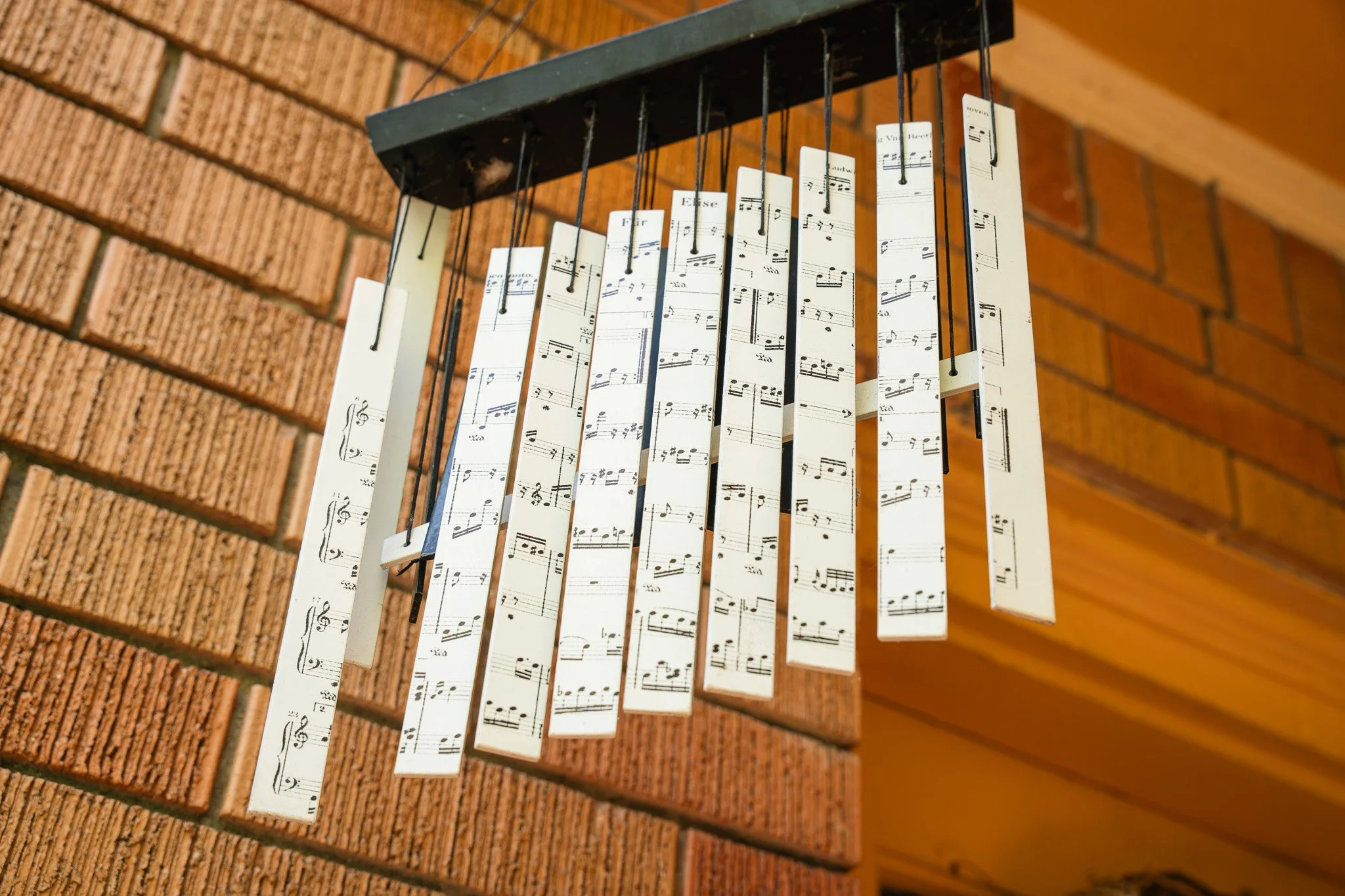
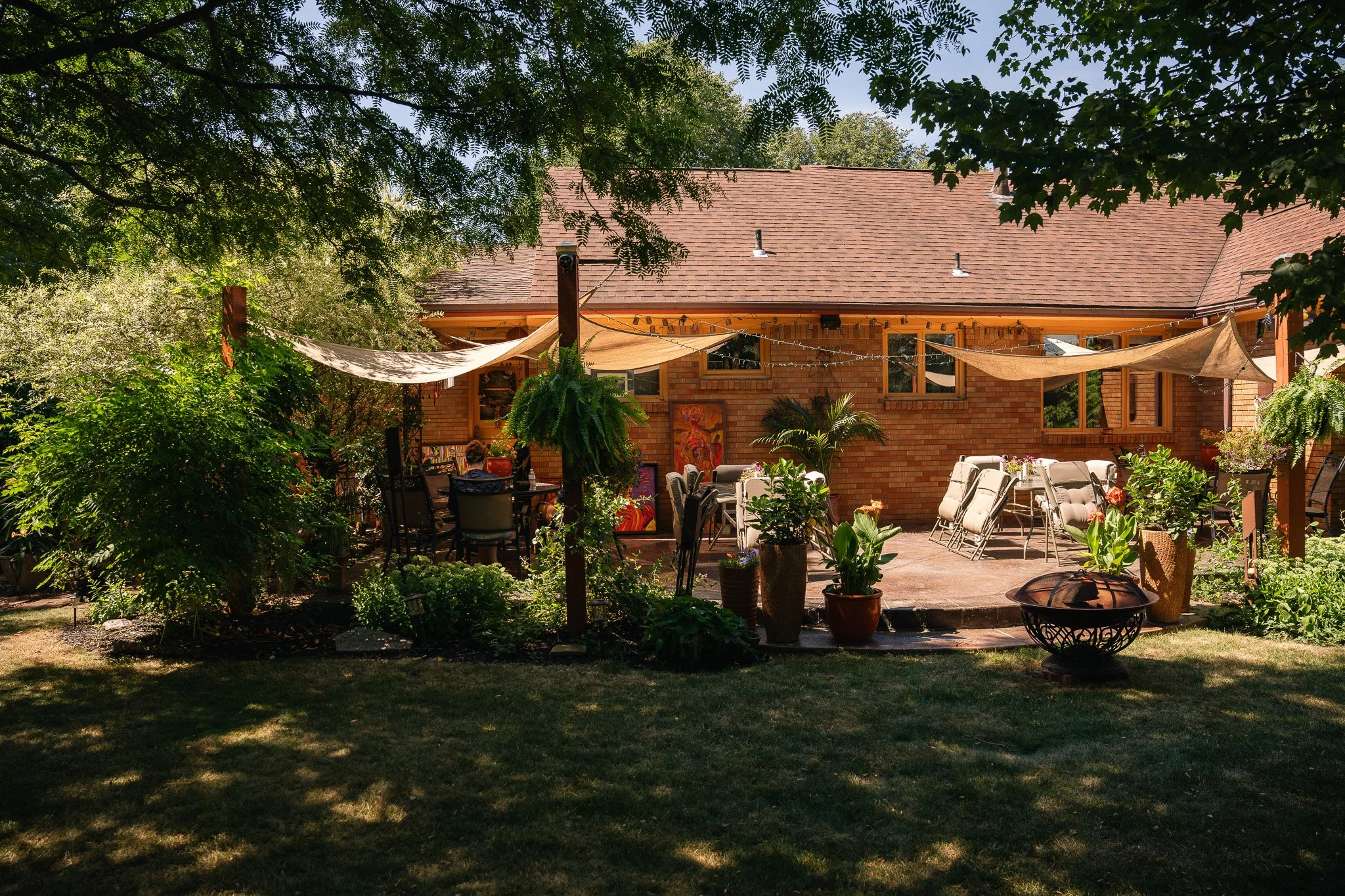
On the East Side of Buffalo, a tan brick home is nestled into its own version of an urban garden oasis, with a Pinterest-worthy backyard that extends the length of the one-story property. It's a house that can be missed, unless you’re looking for it; but once you see it, you’ll never forget it.
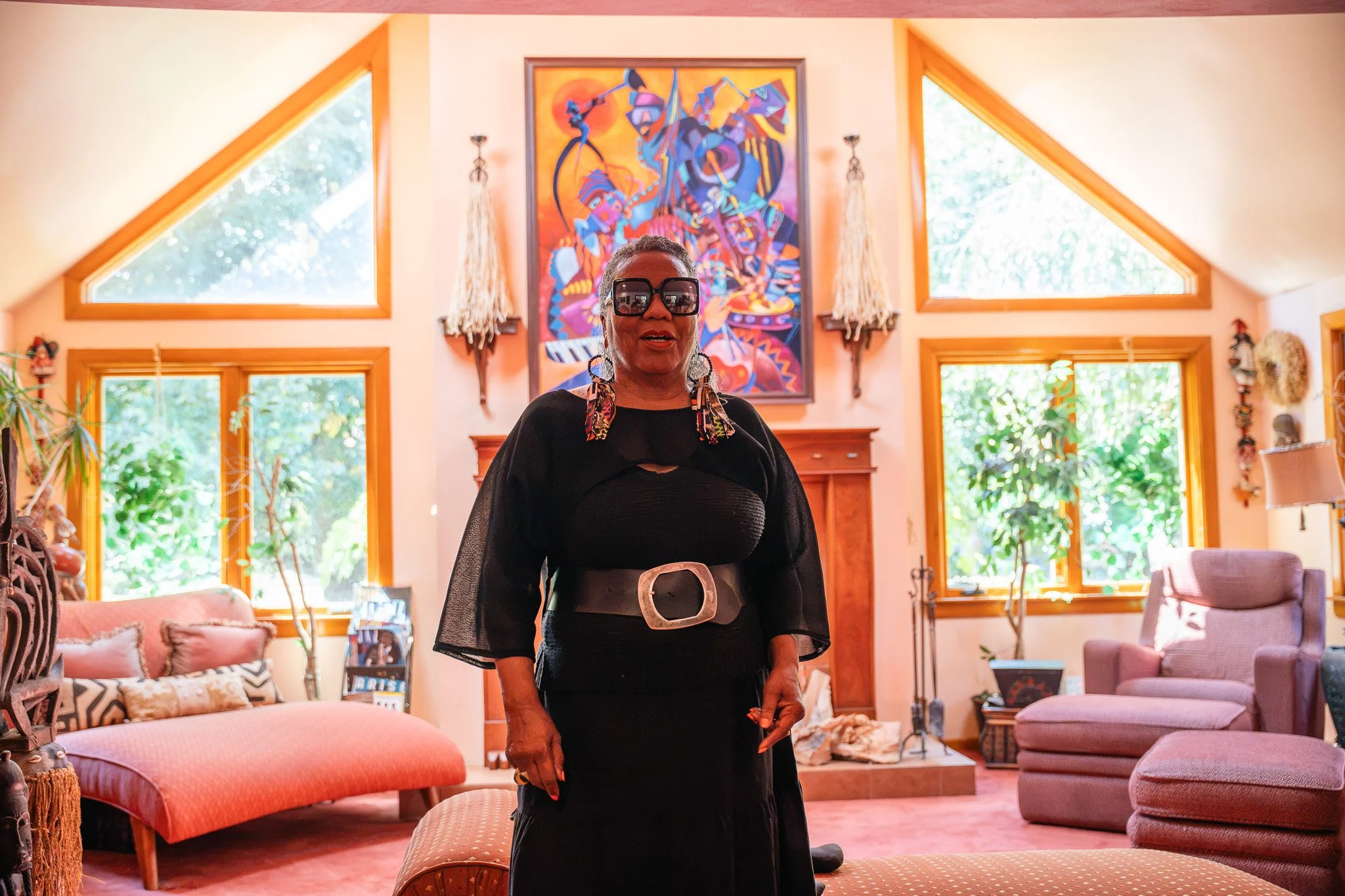
Like her home, Dawn Elaine Martin Barry-Walker is an unassuming force. A retired math teacher turned painter, Martin Barry-Walker is a community advocate and leader, keeping the history of authentic jazz music alive in Buffalo and beyond. The Chief Executive and Artistic Director of the Pappy Martin Legacy Jazz Collective, Martin Barry-Walker is the eldest daughter of the late, great James “Pappy” Martin.
A renowned Jazz musician, Pappy Martin played with many well-known artists including Aretha Franklin, and Johnny Griffin. He was also a bandleader and a community activist, who after being inspired by the Million Man March in 2001, came back to Buffalo and started the Love Supreme School of Music, an educational and performance program in Buffalo that teaches young people how to play, understand and appreciate jazz music. Prior to this feat, in 1996, Pappy Martin founded the Masten District Jazz Festival, a free jazz festival held in Buffalo’s East Side community. The jazz festival took on his name after he passed, and is celebrated on the third and fourth Sundays in July each year at Martin Luther King Park.
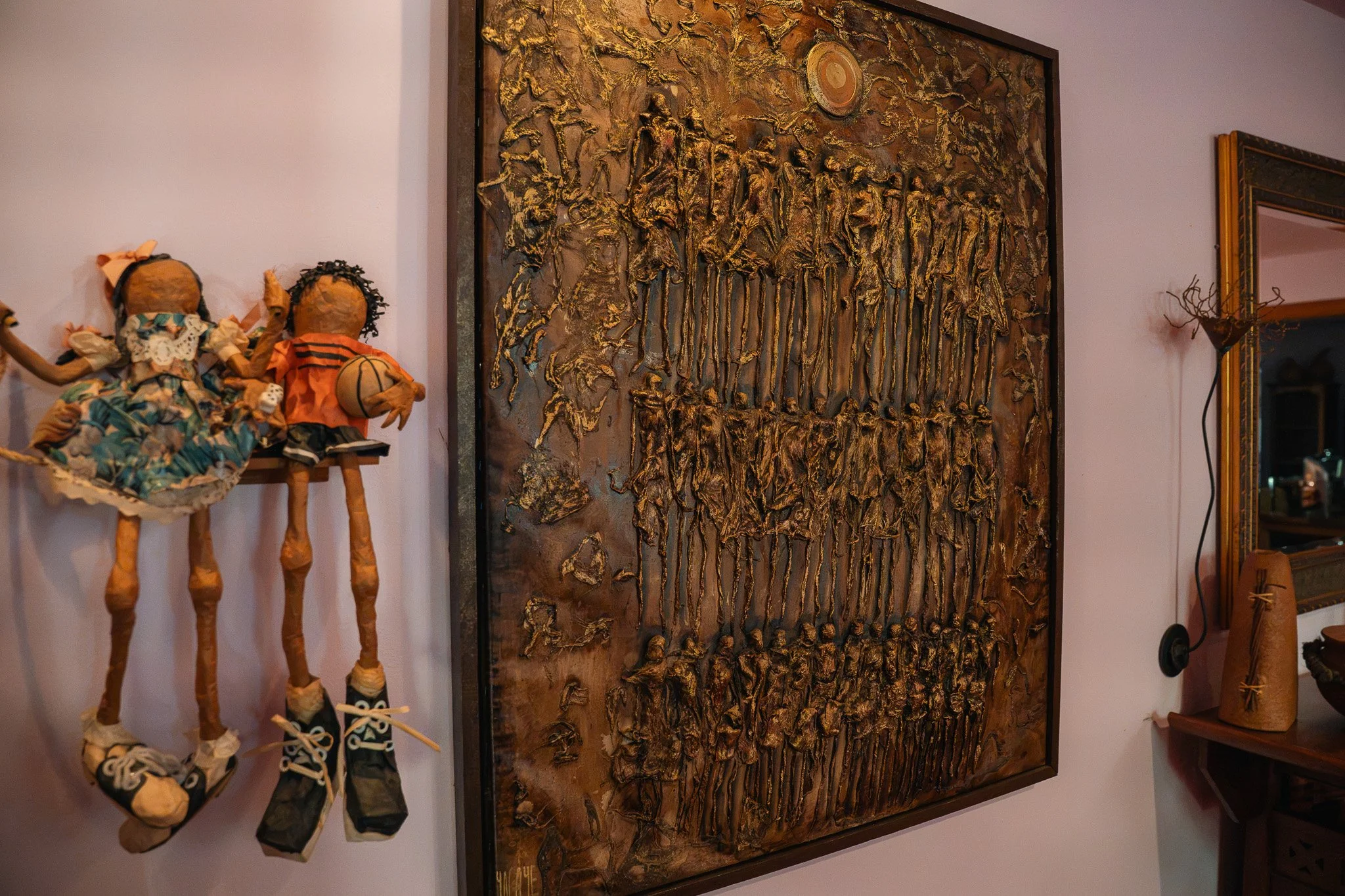
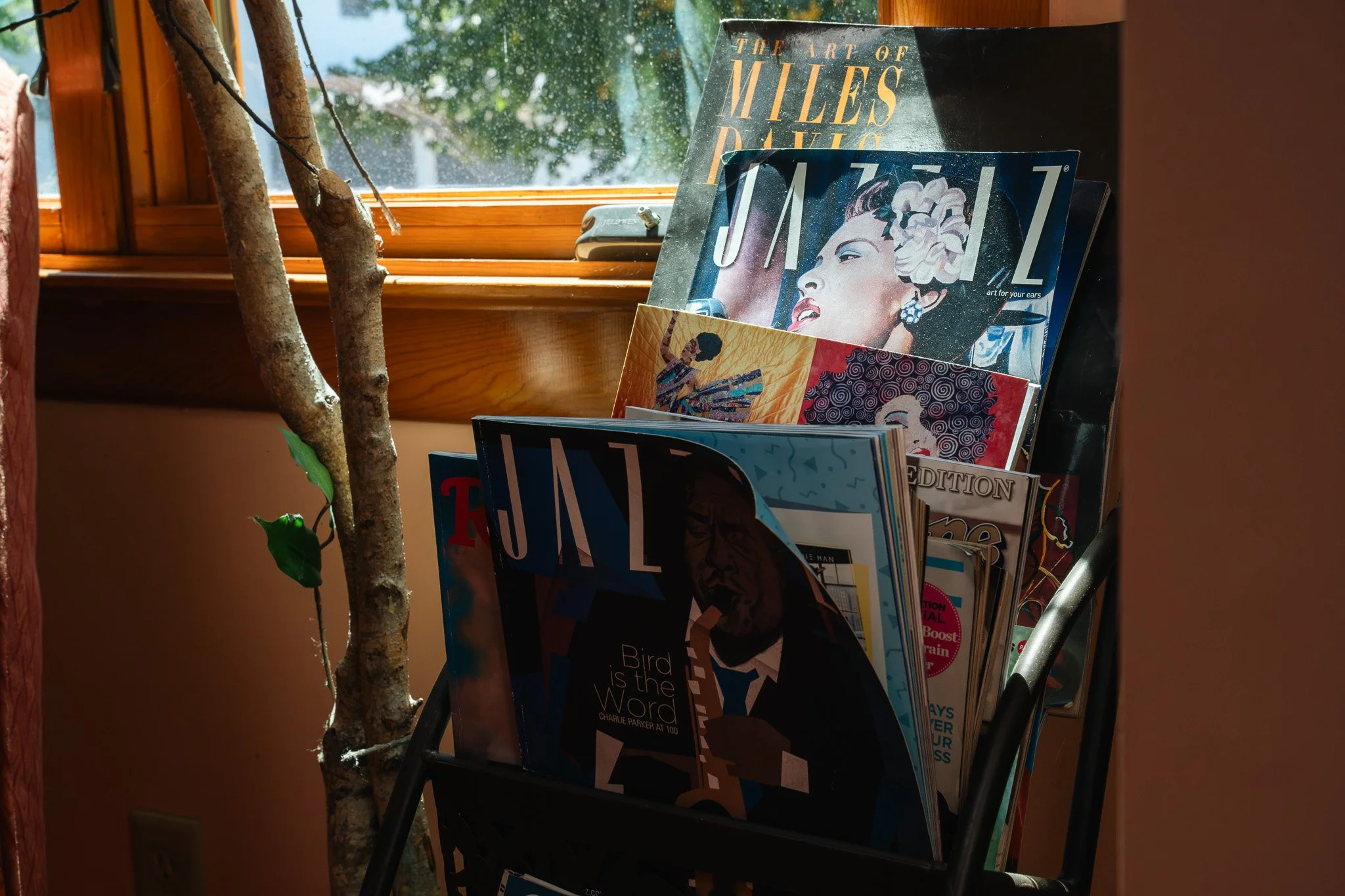
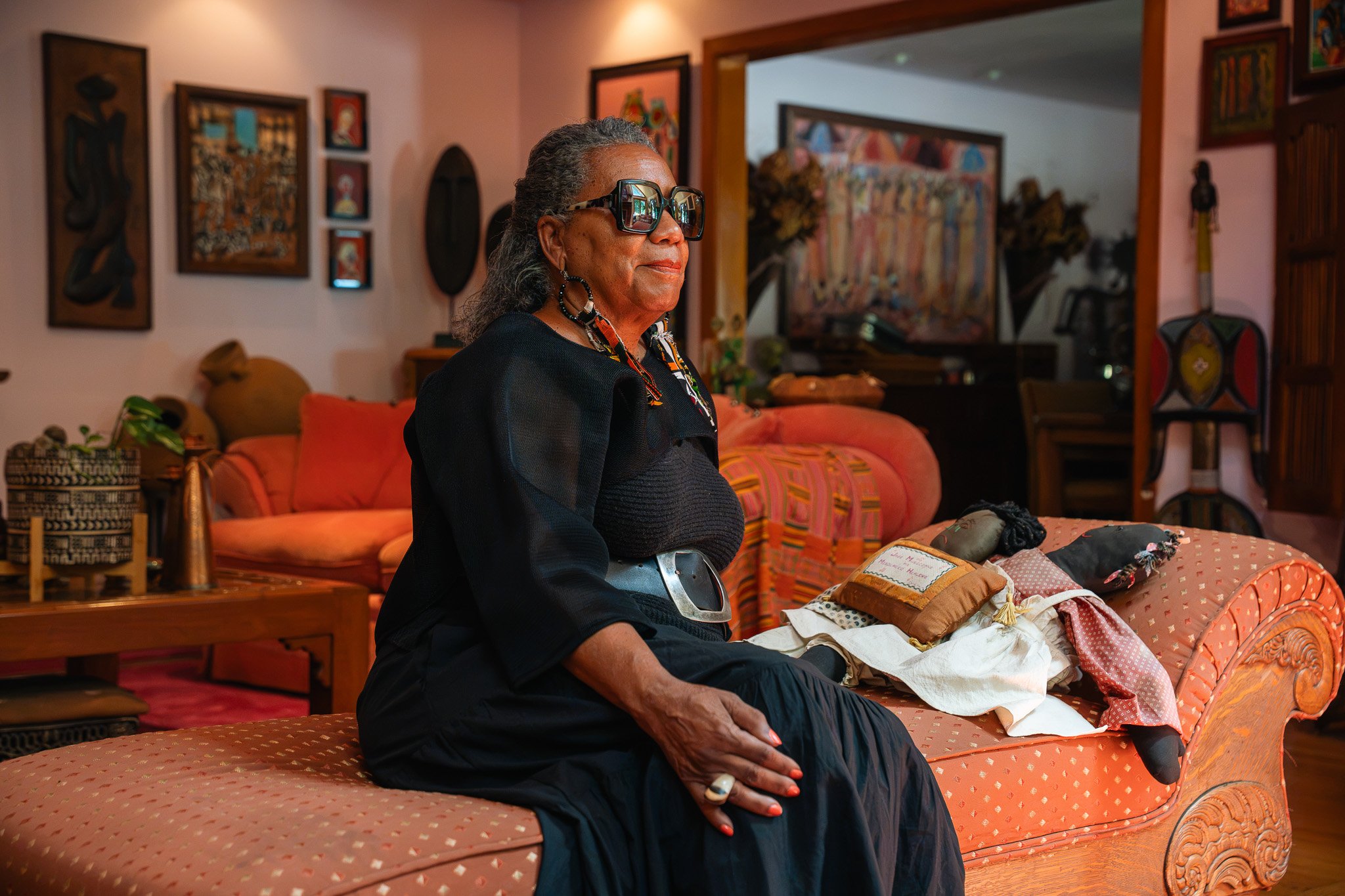
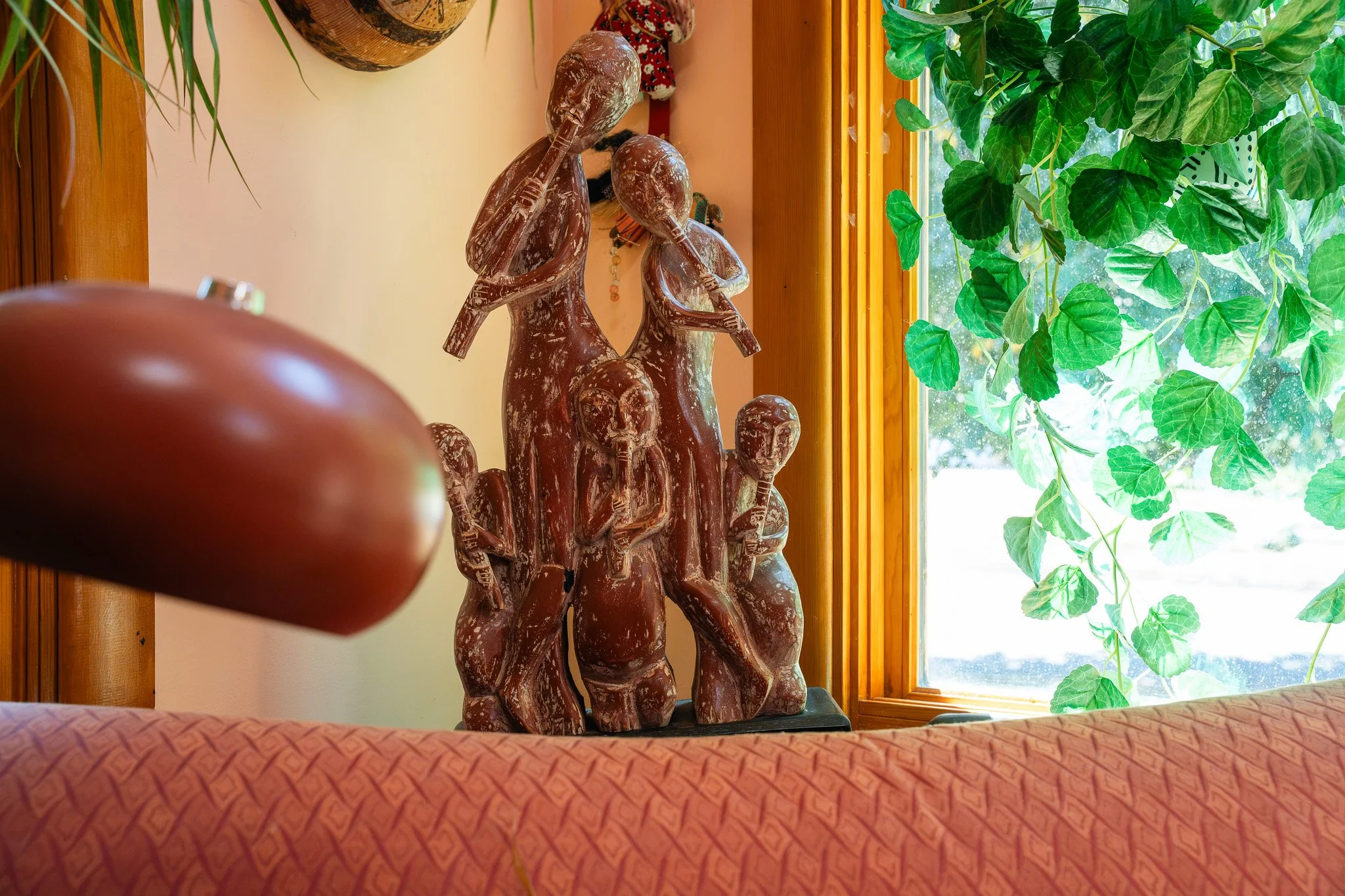
Inside her home, Martin Barry-Walker reflected on the music she has spent her life protecting and promoting. “Jazz is a complete art form,” she said. “It is the rhythm of the African diaspora.” African-inspired ceramics, and paintings adorn the walls of Martin Barry-Walker’s immaculately curated living room. Books about jazz are carefully placed as a focal point. Everywhere the eye travels there is something intriguing to take in. She, and her husband Henry Walker’s largest painting, hangs over the fireplace mantel. Rich purples, peaches, teals and black swirl on the canvas conveying jazz musicians that are interconnected.
“My dad was a musician, but it was my mother who held the family together. I want to be sure I mention Dr. Kay Martin at the beginning of this conversation,” Martin Barry-Walker said. Her mother, Kay Martin, parented five children, worked as a full-time teacher, and pursued both her master’s and doctorate degrees while raising her family. She helped develop the SEEK program with Arthur O. Eve, a precursor to the Educational Opportunity Program (EOP) and eventually became the Director of the EOP program at the University at Buffalo for many years. Dr. Martin was also a lover of jazz music.
Jazz has been a constant presence in the lives of the Martin family. James (JJ) Martin, Pappy Martin’s second child, pursued a career of artistic expression. “Music is my passion,” he said. A multi-talented artist, the younger Martin worked in audio/visual production and moved from Buffalo to New York City. He eventually went back to school for mental health counseling and for the past 30 years has combined his love for jazz, and training in mental health into his role as an impactful life coach.
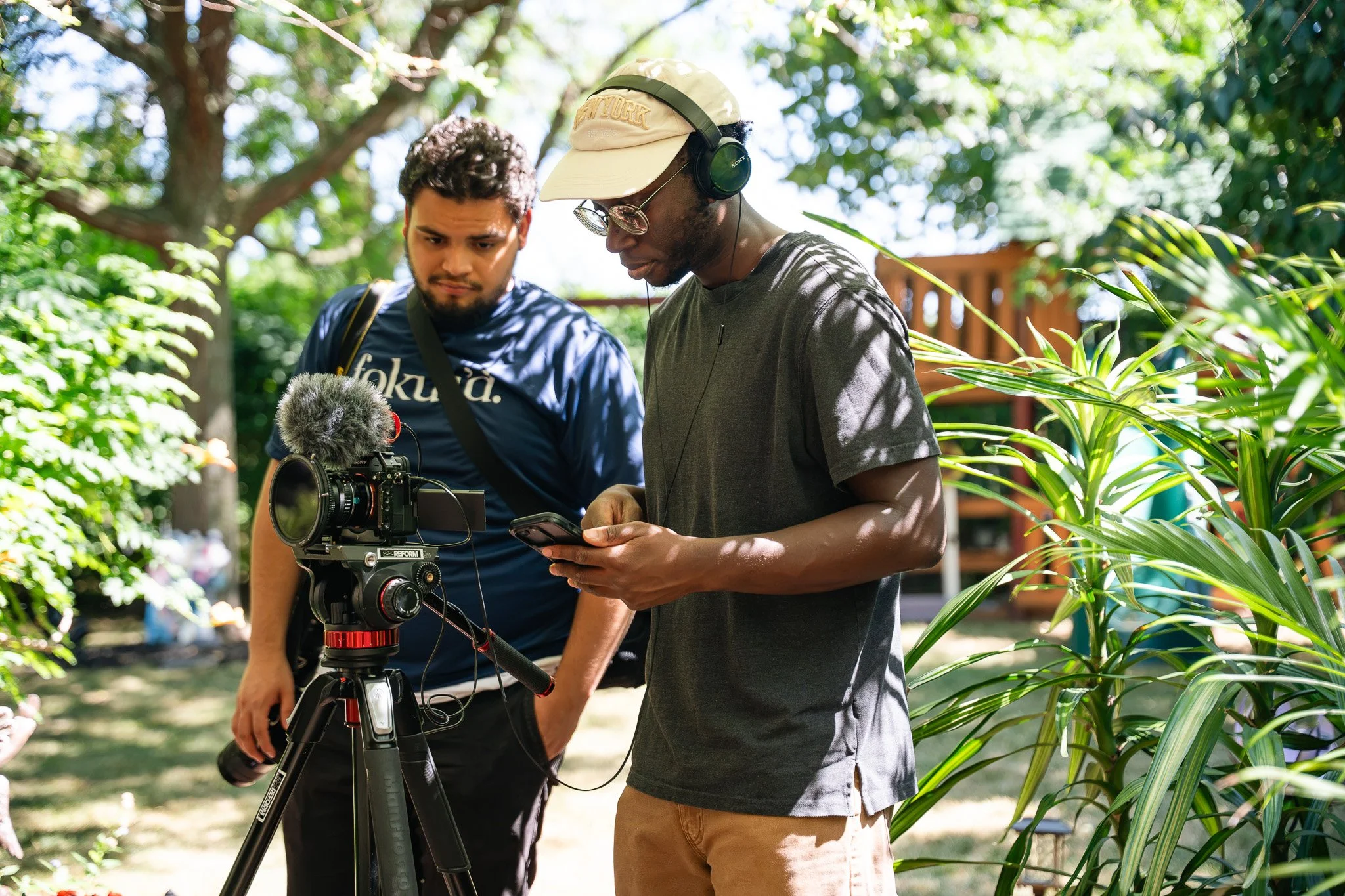
JJ Martin also spent time researching the science behind jazz music. He found that similar to classical music, instrumental jazz has the ability to positively impact several types of human brain waves. “Pappy always talked about perfect notes that could impact the way people think,” JJ said. From the improvisation of jazz, to the complex rhythms and engagement between the players and the listeners, Jazz music can elevate brain activity and support creativity, emotional depth and cognition. In agreement, Martin Barry-Walker noted, “real musicians are always chasing the perfect note.”
Dawn Martin Barry-Walker experienced this first hand growing up in and around jazz music. She continues to be a life-long jazz aficionado and carries jazz into all areas of her life. “When I was teaching, I would give my students a test every Friday. I would create a comfortable environment for them, put on some jazz music and expose them to the benefits of jazz,” she said. Exposing children to jazz through the Love Supreme Music School is critically important to Martin Barry-Walker. She acknowledges that the future of the art form belongs to those coming behind her. “I want as many people as possible to be able to have the experience with music that I’ve had in my life,” she said.
As the head of the Pappy Martin Legacy Jazz Collective, Martin Barry-Walker has learned that even through moments of self-consciousness and doubt, jazz music taught her how to think on her feet and pivot quickly when needed. It is a life skill she takes with her into every situation. “Whatever happens, you should be able, no matter what comes at you, to pivot in a second, and keep going, just like jazz music,” she said.
Martin Barry-Walker wants the community to know that authentic jazz is alive and well in Buffalo, New York, and that people who care about the art form, and the Black Americans who invented it, are encouraged to come alongside the work being done within the Pappy Martin Legacy Jazz Collective. “We are grateful to Oishei for recognizing the work we do and sponsoring our programs," Barry-Walker said.
As a reminder to those enjoying live jazz music, Martin Barry-Walker states that talking and dancing in front of a live jazz band is not jazz etiquette. “During live concerts, it's important to respect the music and listen,” she said. “You wouldn't get up and start dancing at Kleinhans in the middle of a classical music concert. People shouldn’t do that during a jazz performance either.” At the Pappy Martin Legacy Jazz Festival, there is room for dancing on the sides of the audience in a specific section.
A guardian of the art form, Martin Barry-Walker is somewhat of a purist, preferring jazz bebop to newer forms of jazz fusion, but her brother JJ has found ways to lean in. “I can appreciate the artistic approach of jazz fusion,” he said. “It’s all based on African rhythm.”
As our discussion comes to a close, Dawn Martin Barry-Walker’s cell phone ringer sounds. Appropriately, the sound of rich jazz floods through her ring tone. “Music has always given me a sense of freedom”, she says.
For more information about the Pappy Martin Legacy Jazz Collective, and to find ways to support the work Dawn Elaine Martin Barry-Walker and so many others are anchoring within Buffalo’s East Side community, please visit the Pappy Martin Legacy Jazz Collective website.
Ways to take action
Ideation by Aitina Fareed-Cooke
“Dawn Martin Barry-Walker’s work reminds us that a cultural legacy stays alive when people choose to learn from it, support it, and pass it on. Jazz is something to enjoy and it is also a living Black American art form that holds history, discipline, freedom, and the power to connect generations.”
For Funders & Institutions
Support long-term arts education, not only individual performances. Music lessons, instruments, teaching artists, rehearsal space, transportation, and youth showcases all help young people build a lasting relationship with jazz.
Invest in Black-led cultural organizations that protect local history and create meaningful learning opportunities for community members across generations.
Fund the documentation and preservation of Buffalo’s jazz legacy through oral histories, recordings, archives, exhibitions, and public programs that keep the stories behind the music accessible.
Provide flexible operational support so organizations like the Pappy Martin Legacy Jazz Collective can plan ahead, retain experienced leaders, and continue offering free or low-cost programming.
For Our Neighbors
Attend a local jazz performance with a young person, family member, or neighbor. Before the music begins, share a little about the musicians, the venue, or a jazz memory that stays with you.
Support the Pappy Martin Legacy Jazz Collective by attending programs, making a donation, sharing its events, or volunteering your time and skills when you are able.
Listen with care when you attend a live jazz performance. Arrive ready to enjoy the music, keep conversations low, and use designated spaces if you want to dance.
Ask an elder, relative, or longtime community member about the music that shaped them. Save the story in a note, recording, or family conversation so it can live beyond the moment.
For Community Leaders & Educators
Use jazz as a cross-curricular learning tool. Invite students to explore its Black American roots through history, math, writing, visual art, science, and social studies.
Create an assignment where students choose a jazz musician, song, or local cultural leader, then share what they learn through a playlist, short profile, poem, podcast, artwork, or presentation.
Partner with the Love Supreme School of Music, local musicians, or arts organizations to bring instrument demonstrations, music workshops, and artist conversations into schools and youth programs.
Plan a field experience at a jazz festival, performance, or music program. Follow it with a reflection activity that asks students what they noticed about listening, improvisation, community, and creative expression.
For Artists & Storytellers
Study jazz as a creative practice. Notice how improvisation, deep listening, collaboration, and the courage to pivot can inform your own art form.
Create work that uplifts Buffalo’s jazz elders, educators, musicians, and family legacies through portraits, interviews, poems, photography, short films, sound projects, or visual art.
Build intergenerational creative spaces where young people and elders can share songs, memories, artistic skills, and stories with one another.
Use your platform to share local jazz performances, music education opportunities, and the work of cultural organizations that keep this art form present in Buffalo.