
Pappy Martin’s Legacy Lives On: Jazz Festival 2026
Written by Ekaete Bailey
Images by Kalvin Booker (Through His Lens Photography)
& Paul Knight (Deer Crest Productions)
Video by Alex Felix
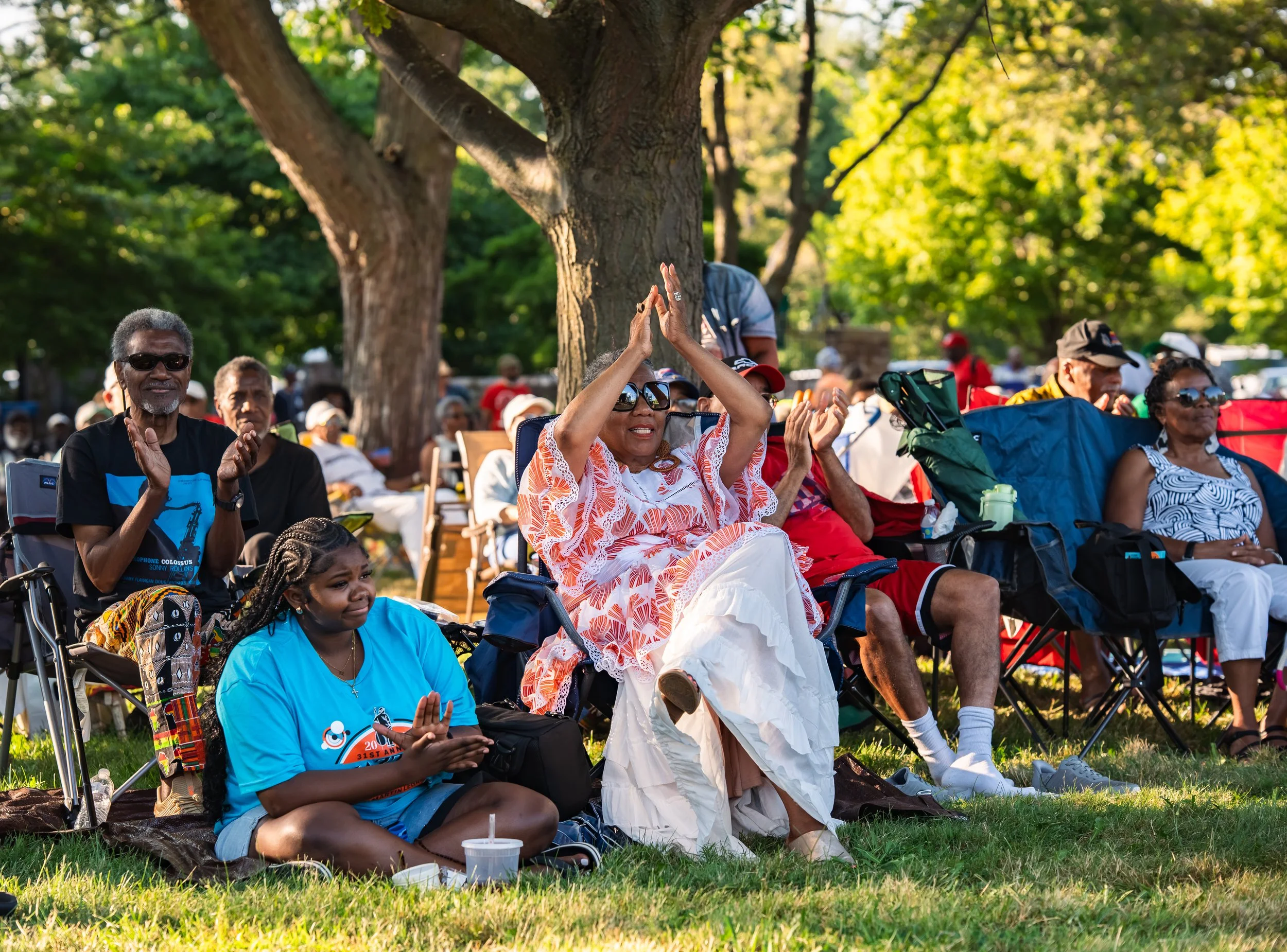
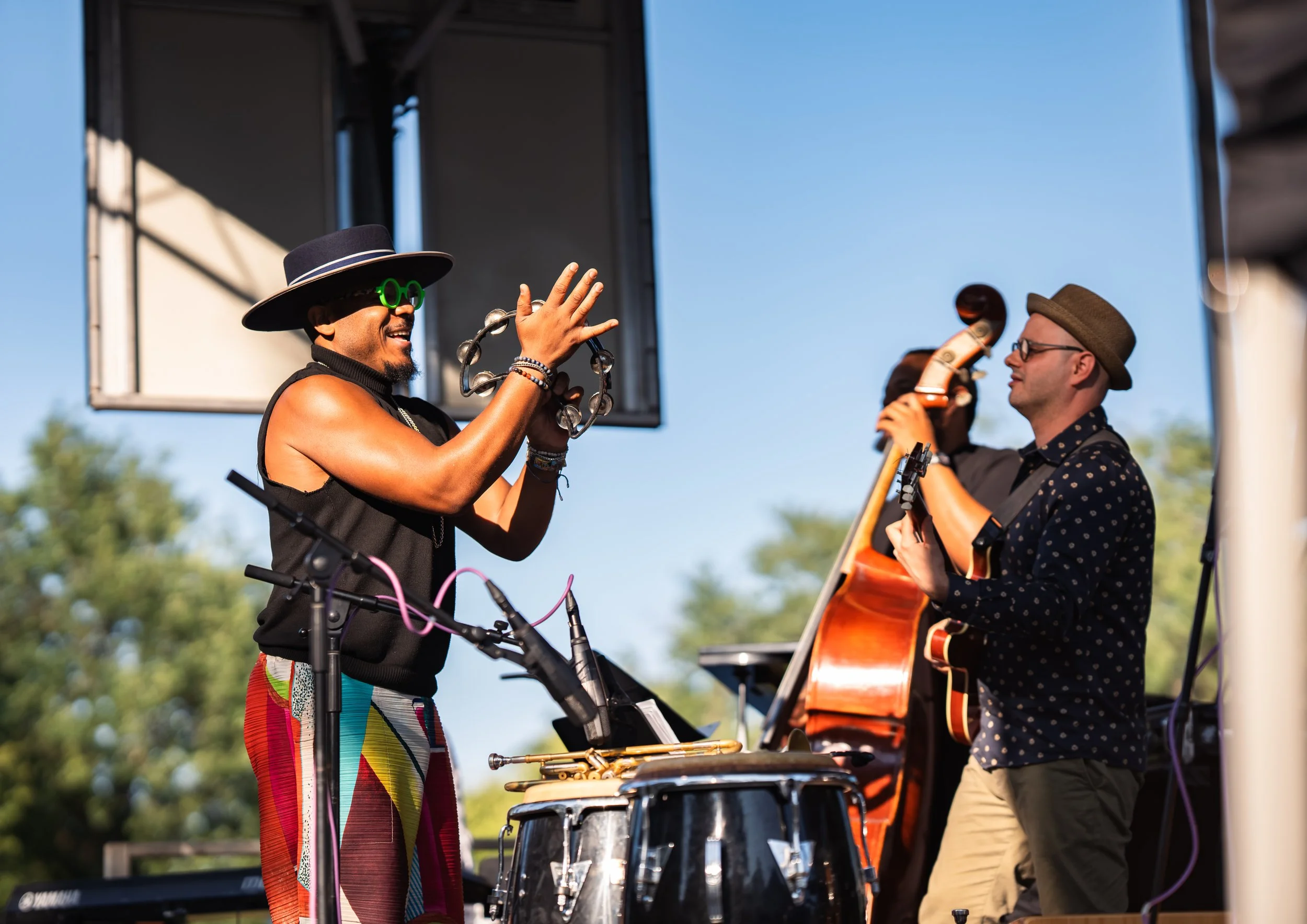
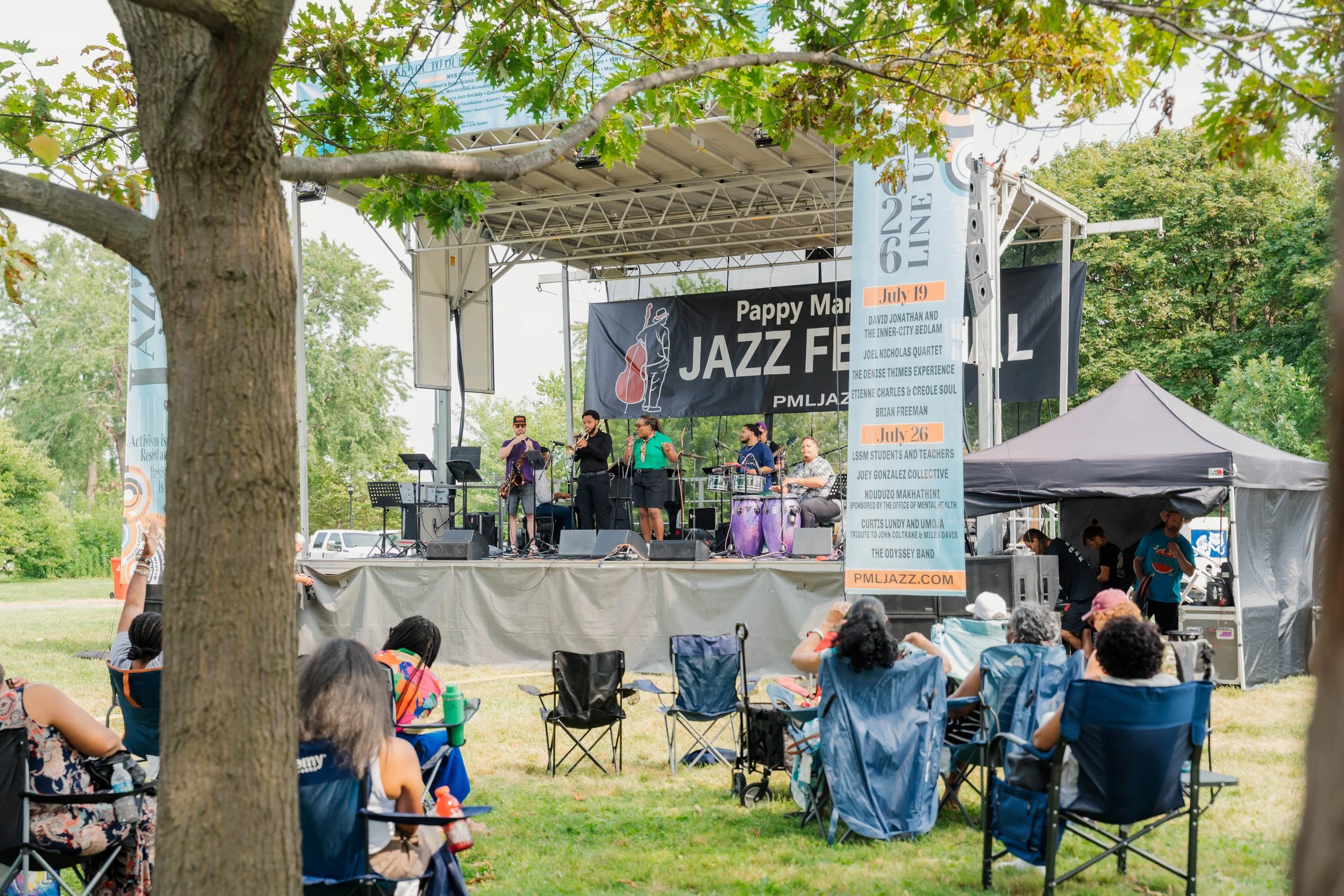
As you approach Martin Luther King Park, near the Buffalo Science Museum, on a 3rd or 4th Sunday afternoon in July, you’ll begin to hear sweet, melodic, instrumentals coming from the historic stage of the Pappy Martin Legacy Jazz Festival.
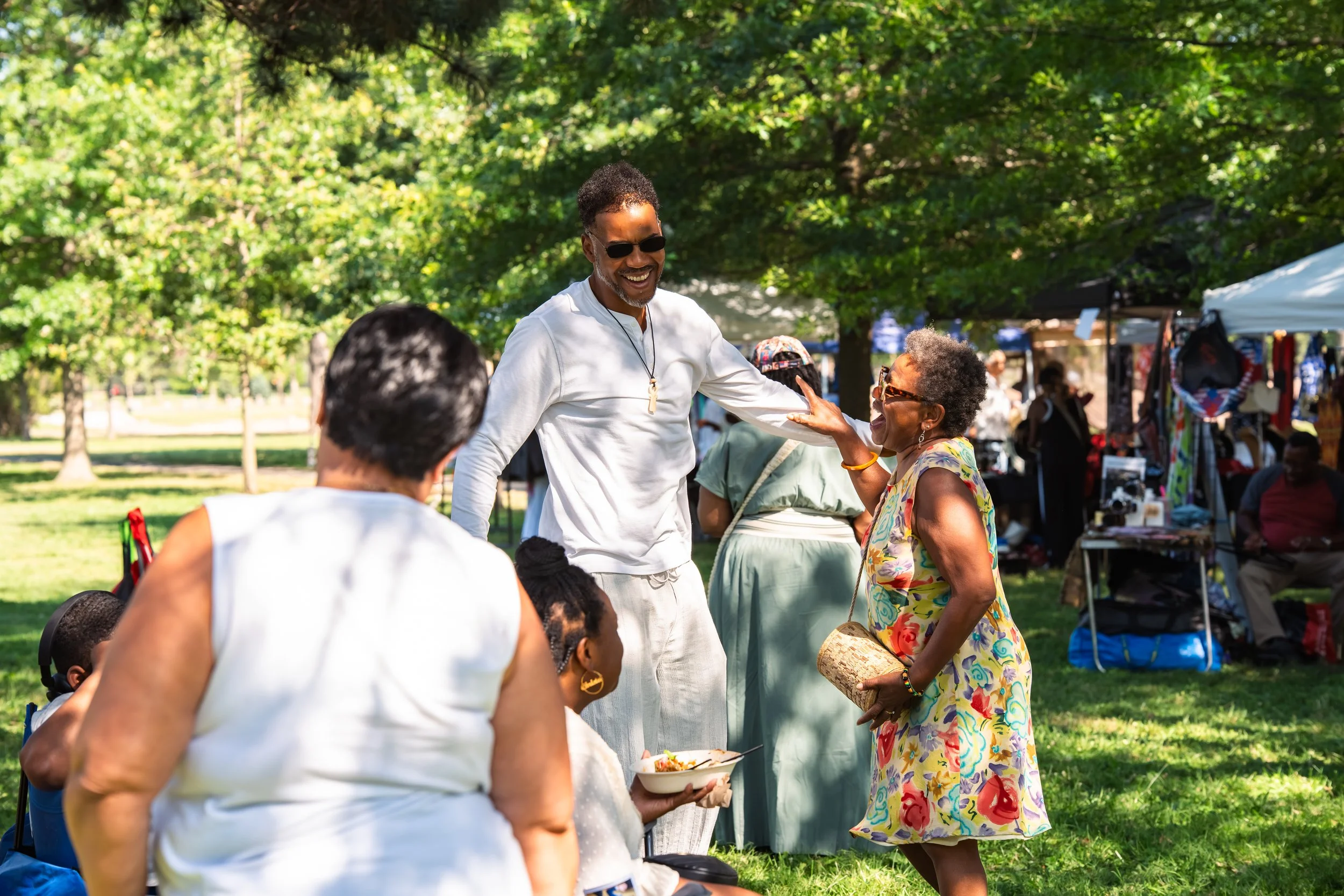
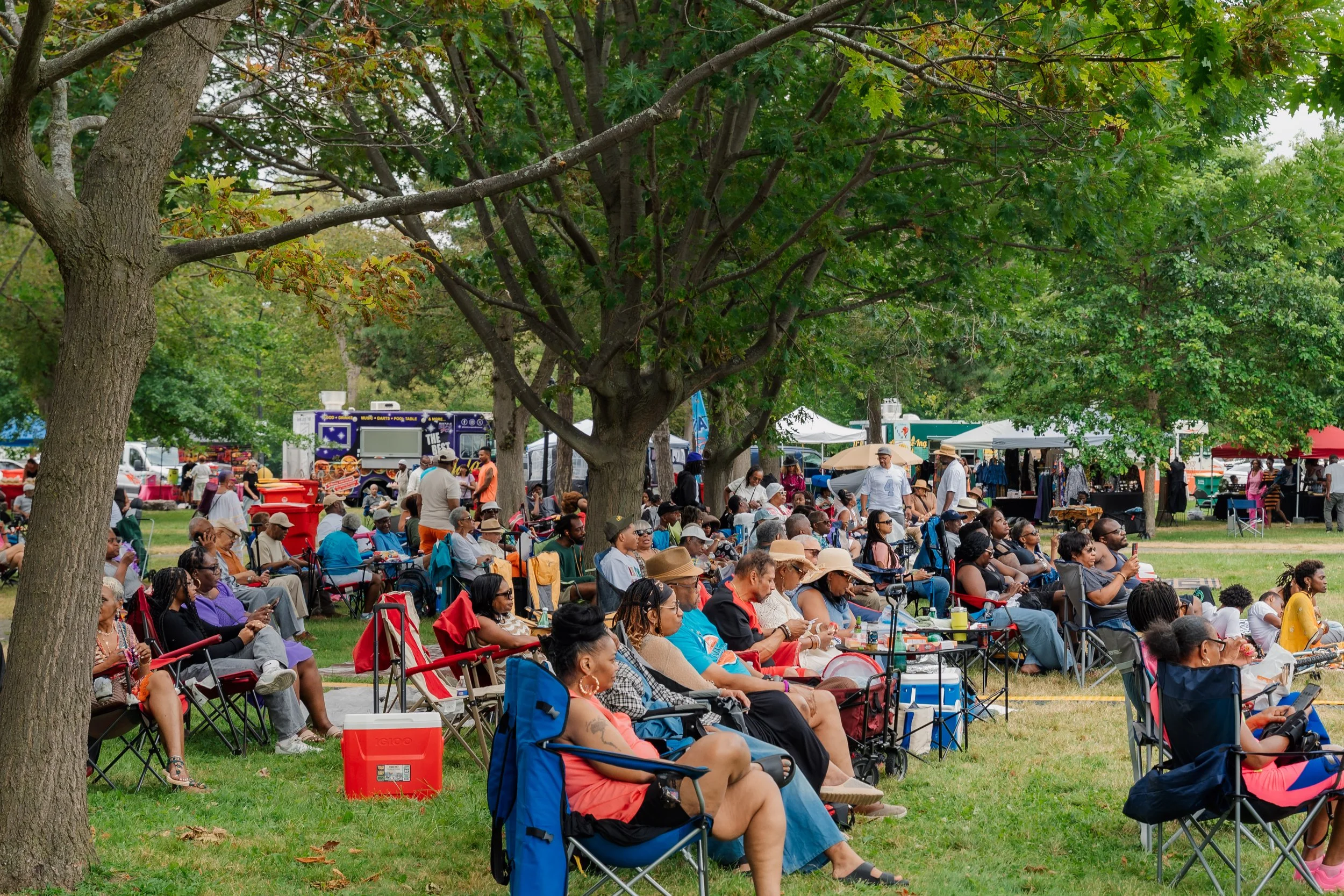
An elder walks by wearing a Betty Boop shirt. Betty has the same large eyes and facial expression, but has deep brown skin. The elder notices someone and says hello. He gets up and gives her a big hug. Interactions like this happen all over the large grassy area where over 400 people gather to celebrate and support authentic jazz music and culture in Buffalo, New York.
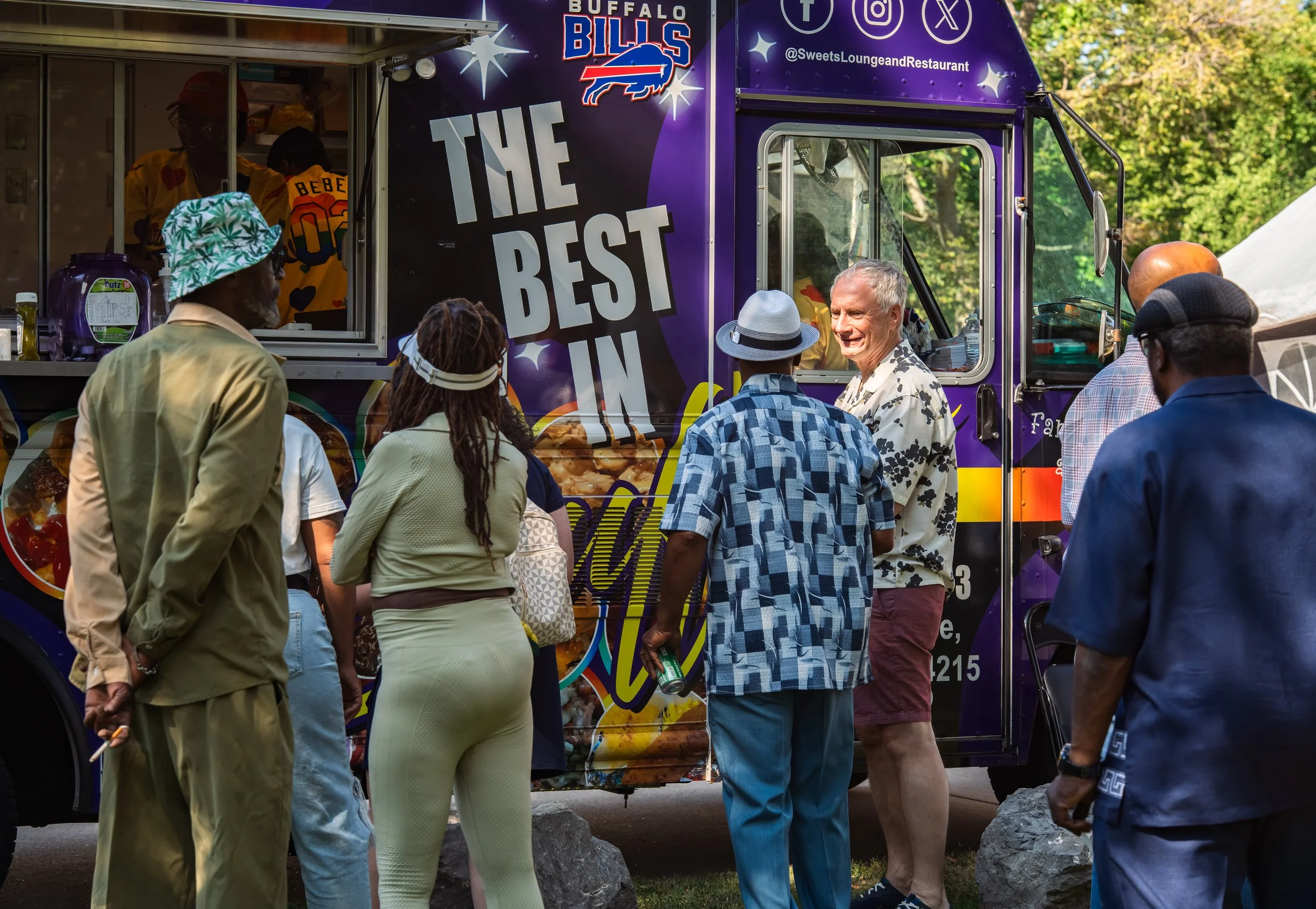
The 2026 festival took place on Sunday, July 19th and 26th. The last day of the event boasted temperate weather and a warm breeze. An ideal area for a concert, the tree-infused park created a family atmosphere with couples on blankets, neighbors on lawn chairs, and friends gathering around food, tables and tents.
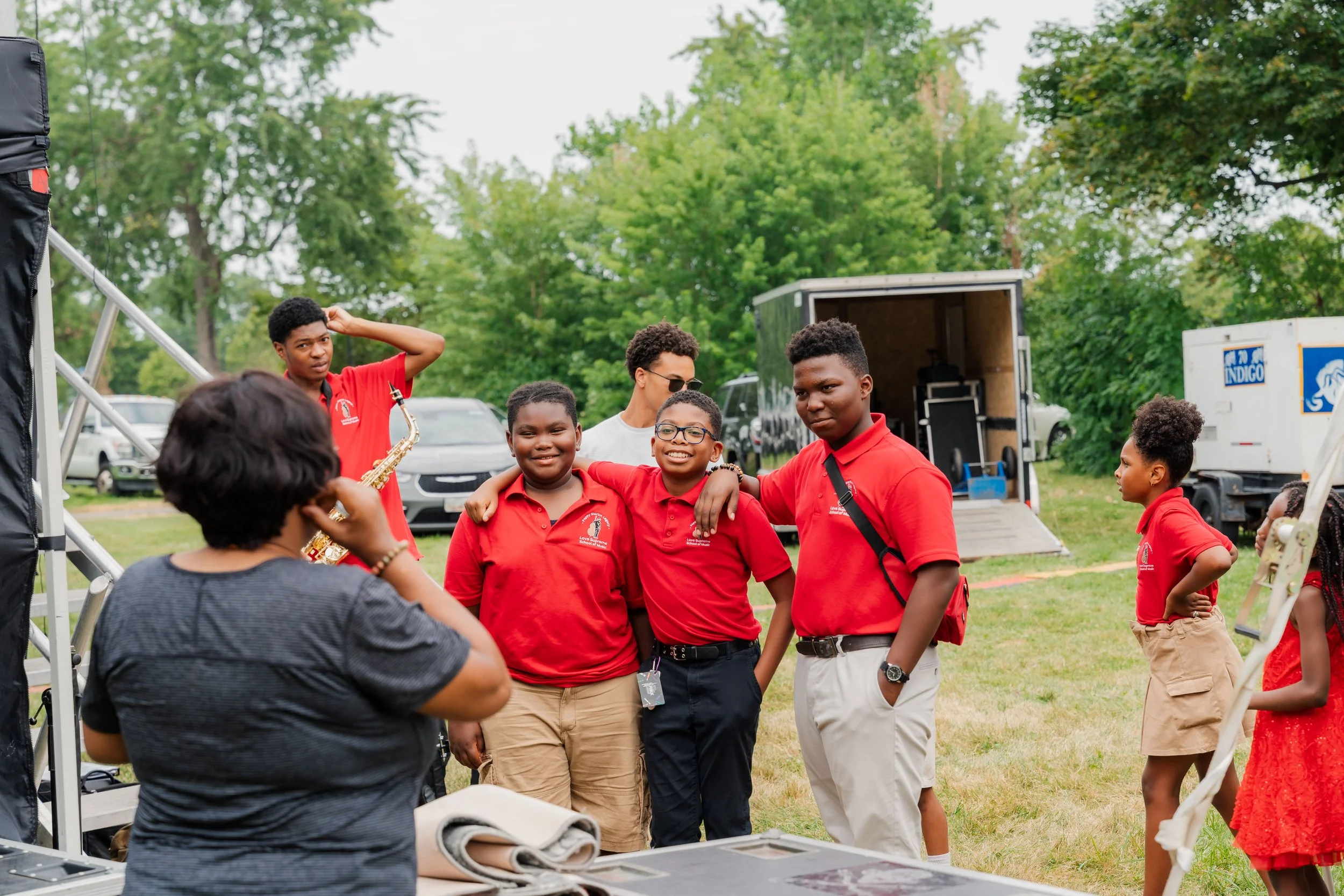
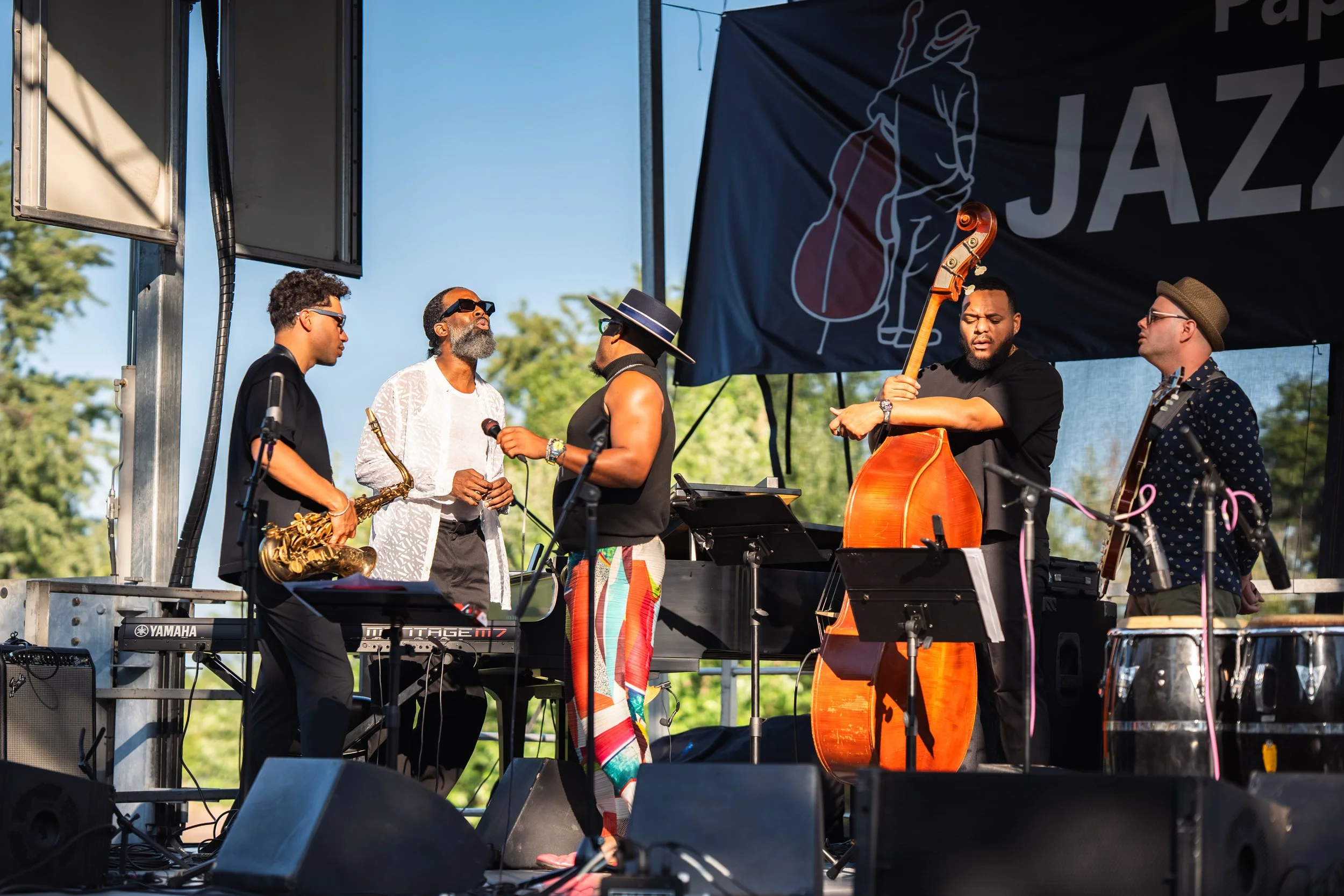
The band line up for July 26th included: Love Supreme School of Music (LSSM) Teachers and Students; Joey Gonzalez Collective; Nduduzo Matkhathini (sponsored by the New York State Office of Mental Health); Curtis Lundy and Umoja; and the Odyssey Band.
On July 19, the lineup included: David Johnathan and the Inner City Bedlum; Joel Nicholas Quartet; The Denise Thimes Experience; Etienne Charles and Creole Soul; and Brian Freeman.
Late in the afternoon on the 26th, the band leader, Nduduzo Matkhathini, talked to the audience about how jazz music can bring people and communities together. “We don’t just compose music, we compose ourselves,” he said.
Get Fokus’d Productions staged a mini living room scene on the outer edge of the lawn for the purpose of interviewing festival goers. Each person who volunteered to be interviewed selected a question from a wooden bowl and answered the question based on their own experience. At the end of the short interview, Aitina Fareed-Cooke, would ask each person to describe black joy in ten words or less. “Black joy is teaching Sunday School,” Eileen from Buffalo said.
Retha Jones aka Andthensome, a Buffalo resident and stand-up comedian, answered the question related to who she sees represented at the festival and who is missing.
“Looking around this space, who I noticed is mostly elders, couples, the seasoned community. Who is missing? The youth. What does that say about the community? I know that sometimes we get confused on when the youth and the elders should intermingle. I personally feel like we segregate each other by age,” Retha said. She went on to say that elders and youth have a lot they can learn from each other.
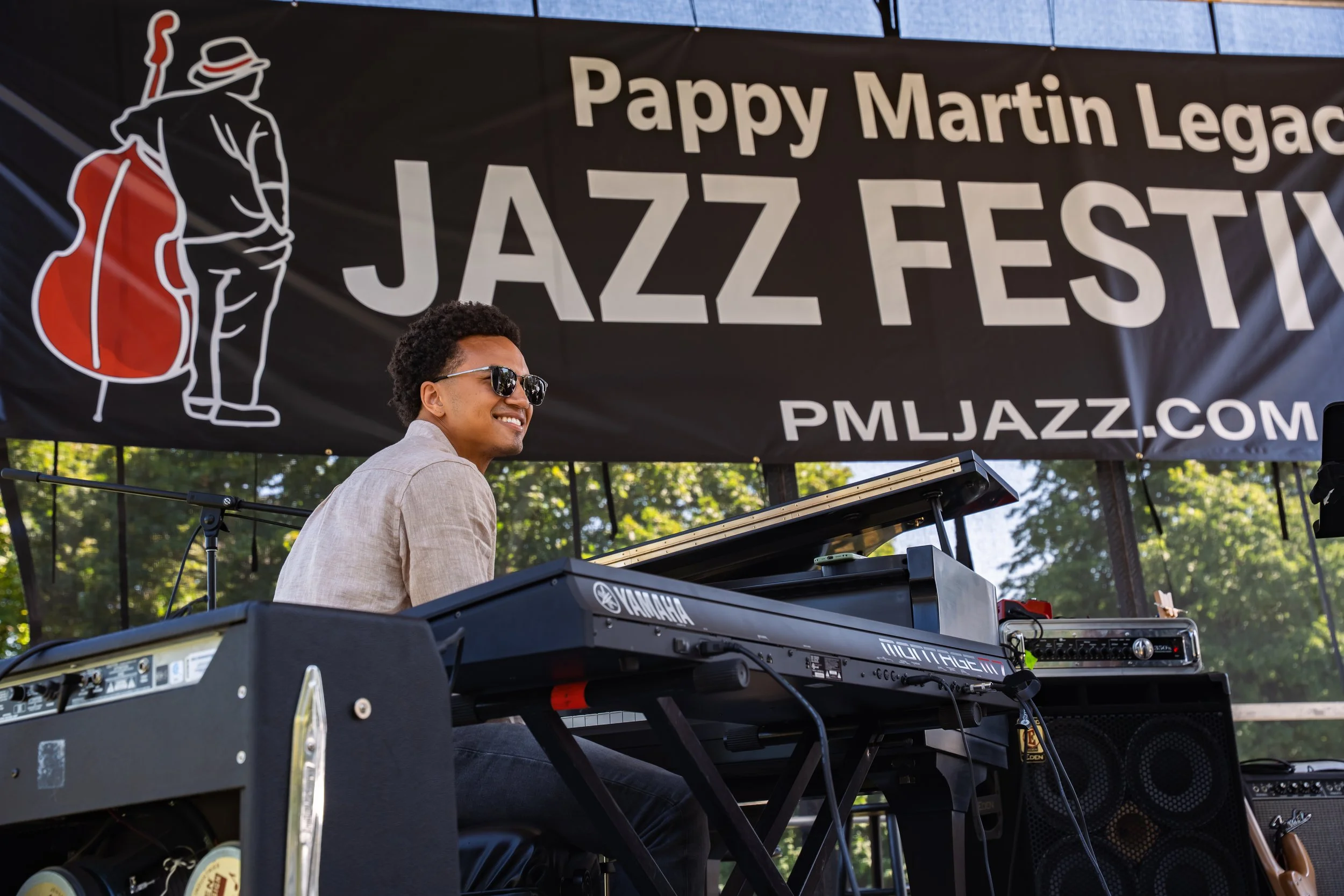
As the second to last band to grace the stage, Curtis Lundy and Umoja played a nostalgic tribute to the greats Miles Davis and John Coltrane. Toward the end of their set, they played “Love Supreme Part 1”, a nod to the name of the Buffalo-based music school started by James Pappy Martin.
Pappy Martin’s children, Dawn Martin Barry-Walker and James “JJ” Walker, continue their father’s legacy by supporting the annual jazz festival. Dawn serves as the executive and artistic director of the Pappy Martin Legacy Jazz Collective.
During one of the final Get Fokus’d interviews, Mercedes Godfrey reflected on the importance of jazz in her life and the role her father played in cultivating her interests.
“For me, music is not just entertainment. It’s deep. It’s meaningful. My father introduced jazz to me as a little girl. I can’t tell you about all the names of the musicians and the songs, but I have memories tied to the music. Special memories,” she said.
When asked to describe black joy, Godfrey said, “being yourself in your own skin and learning to love and accept ourselves.”
Ways to take action
Ideation by Aitina Fareed-Cooke
“The Pappy Martin Legacy Jazz Festival reminds us that music can carry memory, build connection, and make room for people to feel seen. Keeping that legacy alive means supporting jazz culture, bringing generations together, and creating more ways for young people to find their place in the music.”
For Funders & Institutions
Invest in free and low-cost jazz programs, performances, and music education that make it possible for community members of all ages to experience live music close to home.
Support paid opportunities for local musicians, music educators, youth performers, and cultural workers who keep Buffalo’s jazz legacy active and accessible.
Fund intergenerational programs that bring elders and young people together through music, conversation, mentorship, and shared creative experiences.
Help cultural organizations document their histories, preserve community archives, and share stories that connect today’s audiences to the people who built Buffalo’s jazz tradition.
For Our Neighbors
Bring a young person, friend, or neighbor to a local jazz performance, music lesson, or cultural event. Share the music and the memories that make it meaningful to you.
Ask an elder in your family or community about a song, musician, or music memory that stays with them. Write it down, record it with permission, or pass it along to someone younger.
Support local musicians, music schools, venues, and festivals by attending performances, sharing event information, purchasing music or merchandise, or making a donation when you are able.
Make space for different generations to gather. A living room listening session, family cookout playlist, or neighborhood music night can open up meaningful conversation.
For Community Leaders & Educators
Invite local musicians, music educators, or festival organizers into classrooms and youth programs to talk about jazz, improvisation, Black music history, and creative careers.
Create a student project that asks young people to interview a family member or community elder about a song, artist, or musical memory, then turn that story into a poem, playlist, audio clip, visual artwork, or short presentation.
Plan a field visit to a jazz performance, music school, cultural center, or community festival, then make time afterward for students to reflect on what they heard, saw, and felt.
Build opportunities for youth and elders to learn from one another through music circles, listening sessions, instrument demonstrations, or storytelling gatherings.
For Artists & Storytellers
Use your practice to preserve Buffalo’s jazz history through portraits, oral histories, photography, short films, illustrations, poems, playlists, or community archives.
Create work that makes room for youth and elders to share the same stage, page, screen, gallery wall, or gathering space.
Partner with music schools, local venues, or community organizations to host a listening session, story circle, open mic, or creative workshop inspired by jazz and its legacy.
Share the work of local musicians, educators, and cultural organizers who keep jazz alive in Buffalo, especially those creating space for the next generation.