
Strategic Crisis Communications for Nonprofits:
A Racial Equity Framework Initiative
Written by Ekaete Bailey
Images by Kalvin Booker (Through His Lens Photography)

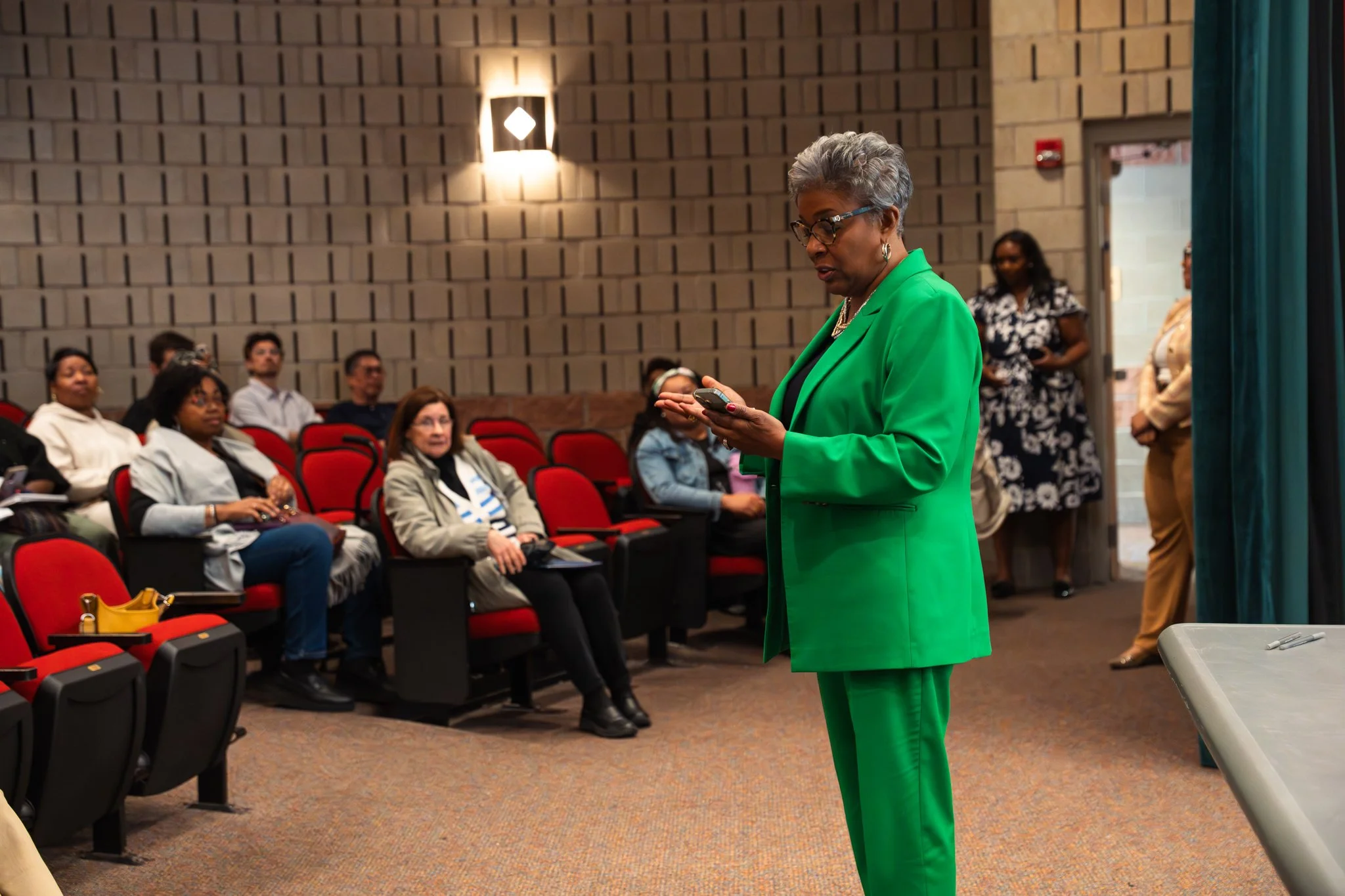
Porsha Ari Parson, in partnership with Perrin Associates and the John R. Oishei Foundation, facilitated Strategic Crisis Communication: Leading with Clarity, Trust and Accountability, the first in a planned series of lunch-and-learn trainings for nonprofit leaders serving the East Side of Buffalo.
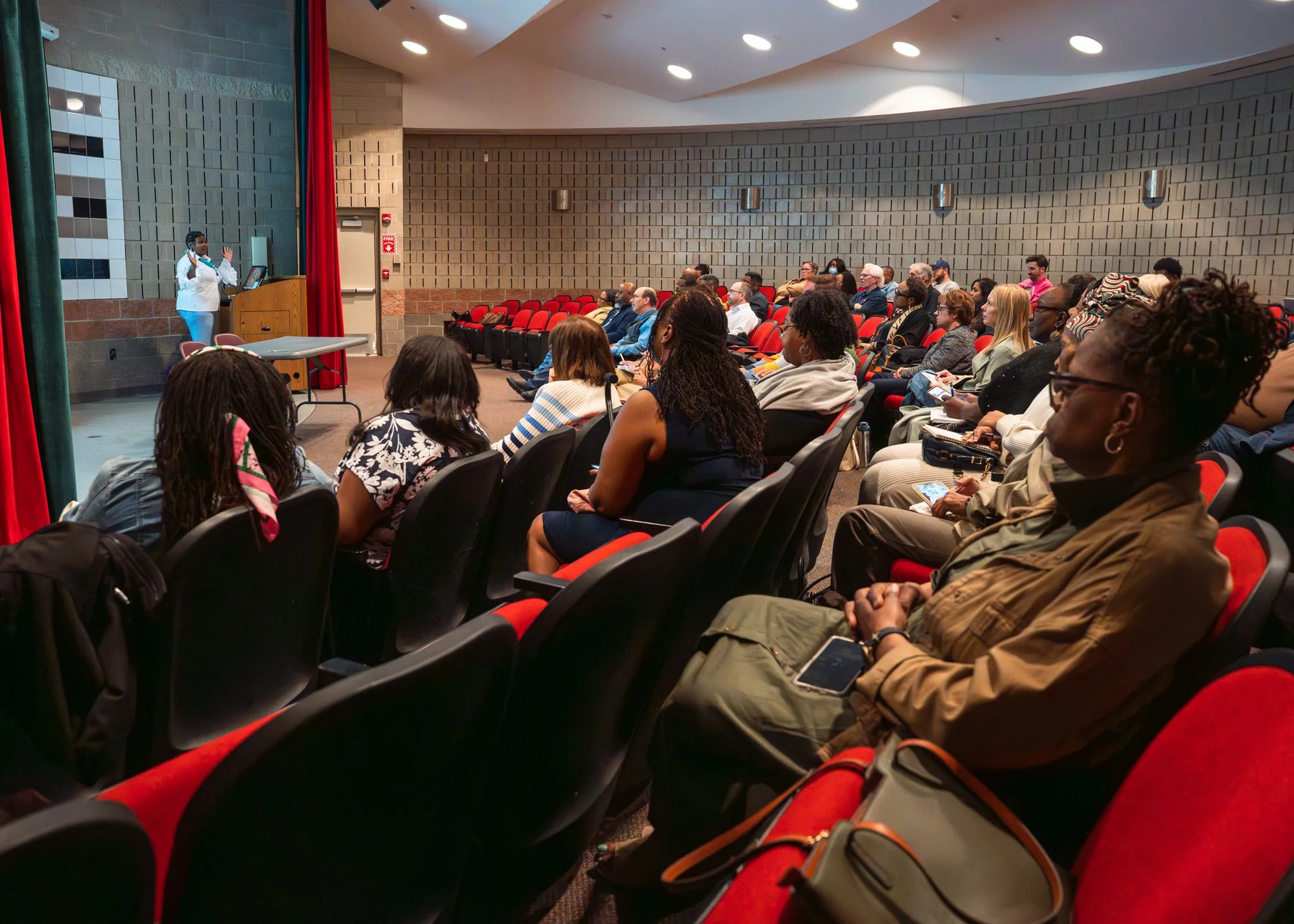
Held in the Frank E. Merriweather Library on Jefferson Avenue, in the heart of the Cold Spring neighborhood, Parson’s training took place in the large auditorium. The curved form and aesthetics of the space reflected the artistry of the late Robert T. Coles, the first Black architect to open a firm in New York State, highlighting the significance of both the setting and the experience.
Supporting Oishei’s racial equity framework, a body of work that seeks to rally community power-building to create and maintain racially equitable systemic and practical solutions within our historically underserved communities, starting with Buffalo’s East Side, Parson provided a timeline and practical learning approach to crisis communications.
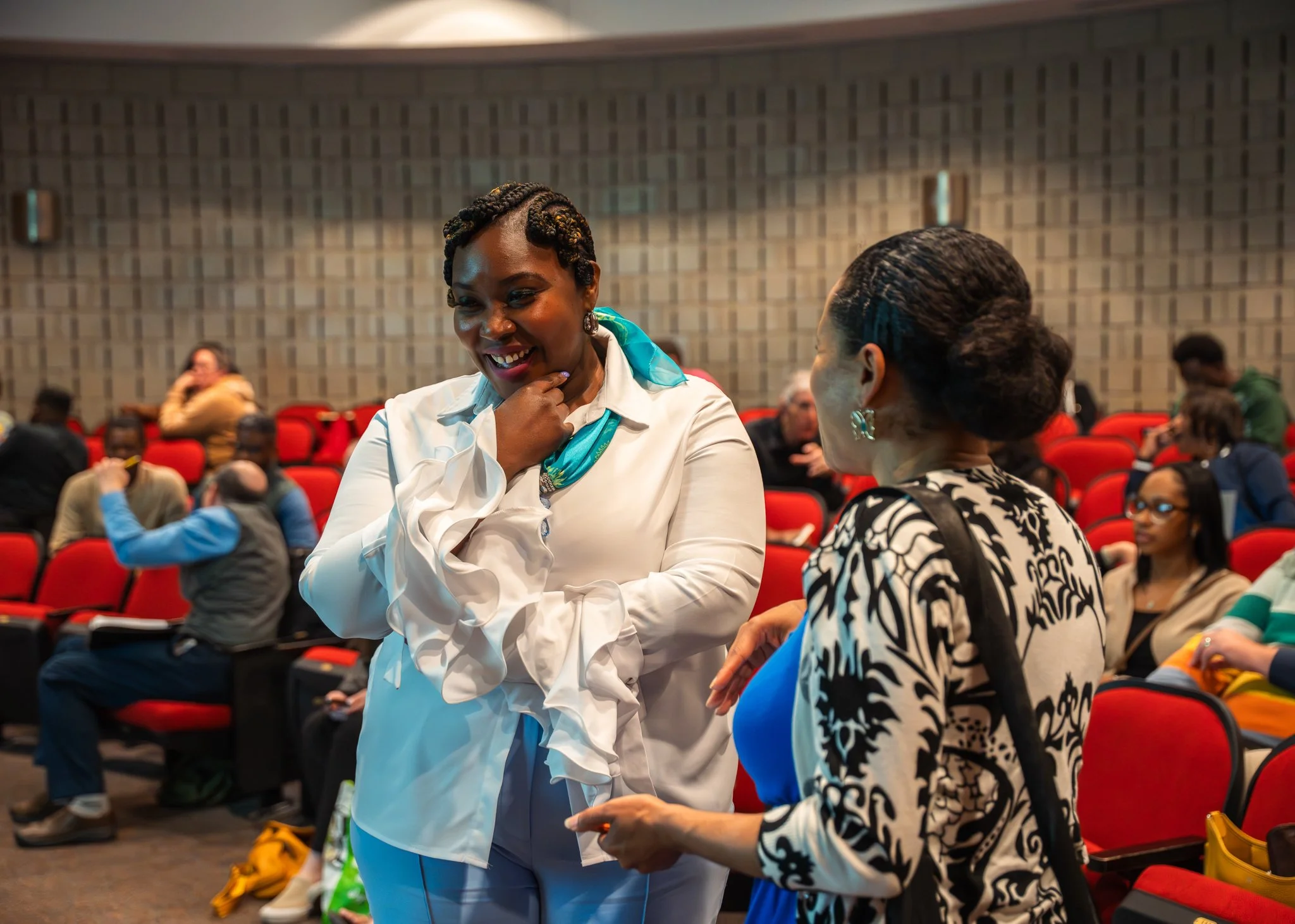

Approximately 60 people leaned into Parson’s training style as she led with best practices and storytelling. Leveraging professional knowledge and gentle humor to make the participants feel comfortable, she relied on audience engagement to ensure the information was retained and applicable.
“Protecting your credibility during a moment of crisis is a relational asset and is possibly even more important than a brand asset,” Parson said to the audience, directly addressing why crisis communications training is imperative.
Communications credibility as a relational asset can be stereotypically absent from some East Side nonprofits, due to lack of resources, which create longer reaction times. “The external audience should never find out about a crisis before anyone at home does,” Parson said. “It is very important that internal finds out before external.”

During the 90-minute training, Parson stressed that timeliness, particularly within the first 12 hours of the crisis, is not only important, but it is critical. One best practice discussed was the understanding of communication priorities. She explained them in the following order:
Board of Directors
Senior leadership
Staff
Donors
Community members
Parson acknowledged there will be times that board members may not be available immediately during a crisis, but she recommended engaging in due diligence by making phone calls (and not emails) before moving down the communication chain. “You’re not looking for agreement, you are looking for everyone to be on the same page,” she reminded everyone.
Another point Parson highlighted was how to navigate when staff members post on their personal social media accounts and expose an internal crisis situation. “Manage social media so it does not manage you and your narrative,” Parson said of the unavoidable power of internet storytelling.
Parson provided a message mapping framework for participants that can be used in real crisis communications, both written and verbal.
Begin with an opening statement that is factual. One line is enough.
Restate your mission in a way that explains what you are saying in your initial public statement.
Reinforce the message by providing additional context.
Include a proof point, one concrete statement that is verifiable.
Establish a boundary, something the organization cannot yet discuss.
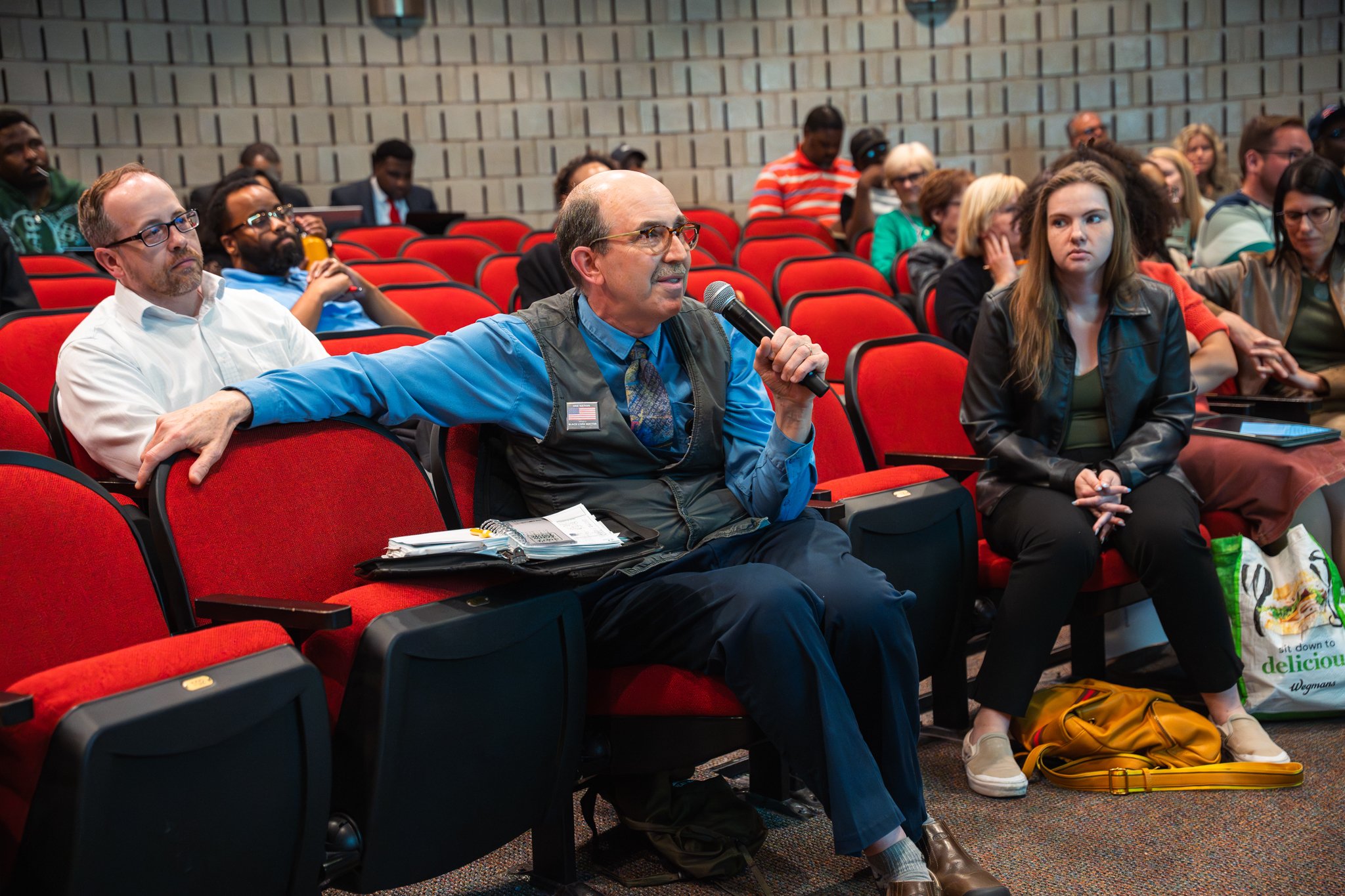
Parson engaged the audience in a practical walk-through as well as a small group activity asking for feedback on how their public statement would be written in the event of a crisis.
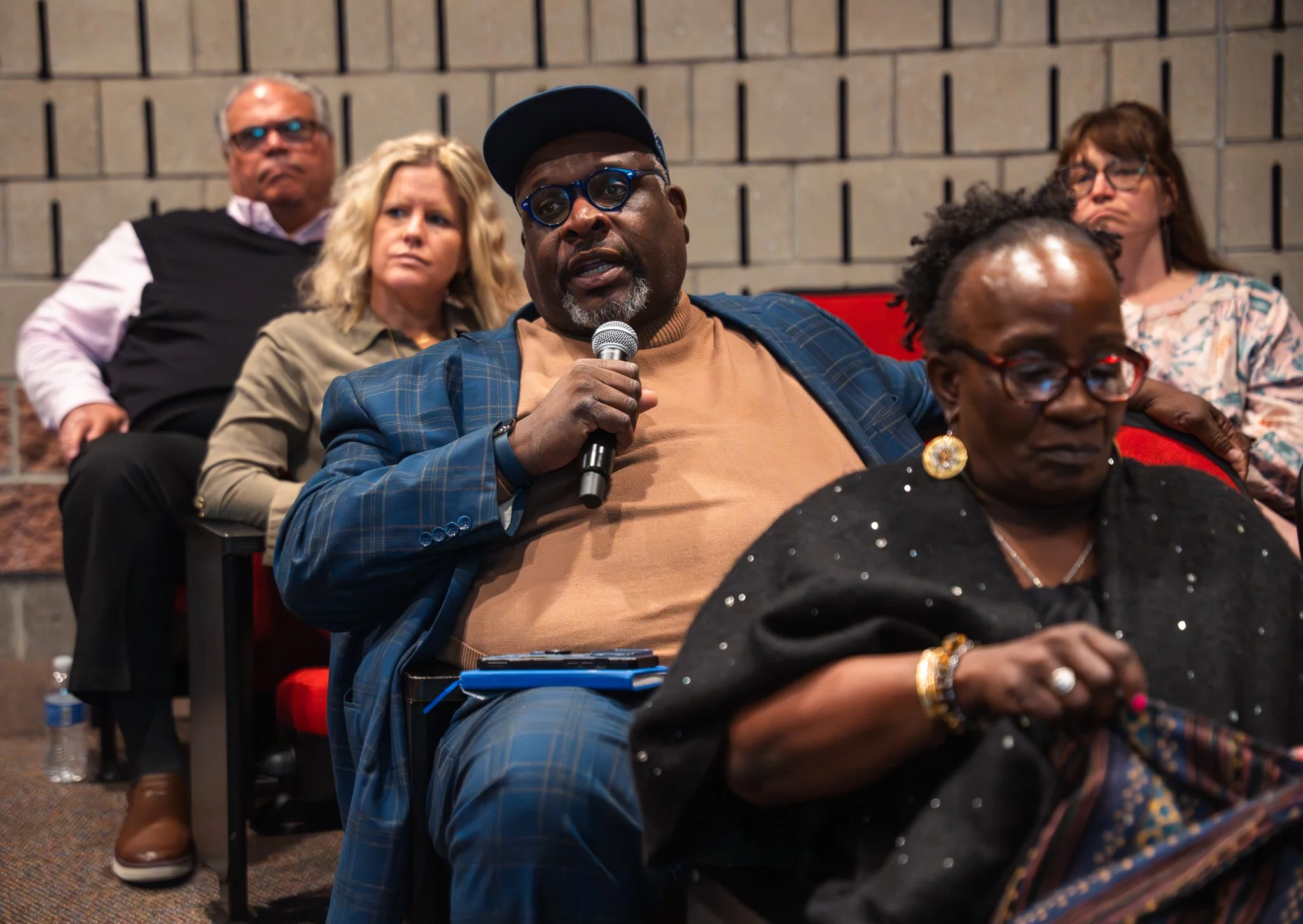

When asked why now, in this climate we are currently living in, it is important to gain a better grasp of crisis communications, Parson said, “so often small nonprofits don’t have large communication departments and so it’s important to equip them with this information so they can be prepared.”
Parson wants nonprofits to know that during a crisis they don't have to discuss legal issues or anything they do not have clear information on. They can use transparency while still creating boundaries.
Wrapping up her training, she encouraged participants to stay consistent, be accountable and follow-through when it comes to communicating about a crisis. “People remember what happened and how they felt about it. Community memory is long,” Parson said.
Ways to take action
Ideation by Aitina Fareed-Cooke
“A crisis can test an organization’s relationships and it can also show people whether care, clarity, and accountability are really part of its values. You have to prep before something happens in order for organizations to respond thoughtfully, protect trust, and stay connected to the people they serve.”
For Funders & Institutions
Fund crisis communication planning as part of organizational health. Small and community-rooted nonprofits need time, tools, training, and staff capacity to respond well when challenges arise.
Offer flexible support that allows organizations to develop communication plans, message maps, internal contact lists, and practical protocols before an urgent situation occurs.
Recognize that quick, clear communication is a trust-building resource. Make room in grants for communications support that helps organizations stay accountable to staff, partners, donors, and community members.
For Our Neighbors
Stay connected to the organizations you rely on and pay attention to how they communicate during difficult moments. Clear information and a willingness to answer what they can are signs of care.
Before sharing an unverified post or rumor, pause and look for information directly from the organization or another trusted source.
If a local organization’s message is unclear, let them know respectfully. A simple question or piece of feedback can help leaders understand what their community needs to hear.
For Community Leaders & Educators
Create a simple communication plan for your organization, school, classroom, or group. Include who needs to be contacted first, how you will reach them, and where people can find verified updates.
Use a real or fictional scenario in class, staff training, or a youth program. Ask participants to draft a short public statement that names the facts, connects to the organization’s purpose, and explains what can or cannot be shared.
Set aside time to practice your plan with staff, students, board members, or volunteers. A short role-play can reveal missing information and make a stressful moment easier to manage.
Teach young people how to pause before reposting information, check reliable sources, and think about how online posts can shape a person’s or organization’s story.
For Artists & Storytellers
Use your work to explore the difference between rumor, reaction, and responsible storytelling. A poem, short video, photo series, or public conversation can help people reflect on how information moves through a community.
Partner with a local organization to create clear, accessible materials that explain where people can find reliable updates during an emergency or difficult moment.
Help community groups make their crisis messages easier to understand by offering skills in design, video, photography, writing, audio, or translation.
When covering a difficult situation, lead with care and verification. Make room for context, privacy, and the voices of people most affected before adding to the public conversation.